Flat roofs are everywhere in Brooklyn. From the brownstones of Bed-Stuy and Park Slope to the brick apartment buildings of Crown Heights and Bushwick, the flat roof is the dominant roofing style across the borough. It makes sense for dense urban construction where pitched roofs would waste valuable space. But flat roofs also have a limited lifespan, and when they start to fail, the damage they cause to the floors below can get expensive fast.
I have been inspecting and replacing flat roofs across Brooklyn with AKRoofing3D for over a decade. The most common thing I hear from building owners is that they knew something was wrong but kept putting it off. A small stain on the ceiling turns into a buckled floor. A little ponding water turns into a rotted roof deck. By the time they call us, the repair bill is two or three times what it would have been a year earlier.
This guide will help you understand when a flat roof repair is enough and when it is time for a full replacement. I will also walk you through the materials we use, what a replacement costs in Brooklyn, and what the process looks like from start to finish.
How Long Does a Flat Roof Last in Brooklyn?
The lifespan of a flat roof depends on the material, the quality of the original installation, and how well it has been maintained. Here are the general ranges for the most common flat roof systems found on Brooklyn buildings:
EPDM rubber membrane: 20 to 30 years with proper maintenance. EPDM is one of the most widely used flat roofing materials in Brooklyn. It handles temperature swings well and is relatively affordable to install.
TPO (Thermoplastic Polyolefin) membrane: 15 to 25 years. TPO is a newer material that has become popular for its energy efficiency. The white reflective surface helps reduce cooling costs in summer.
Modified bitumen: 15 to 20 years. This material uses multiple layers of asphalt-based sheets that are torched, mopped, or self-adhered to the roof deck. It is common on older Brooklyn buildings.
Built-up roofing (BUR): 20 to 30 years. Also called tar and gravel roofing, this is the traditional multi-layer system found on many pre-war Brooklyn buildings. While durable, it is heavy and more expensive to remove when it reaches end of life.
If your flat roof is approaching these age ranges and you are seeing any of the warning signs below, it is time to get a professional inspection.
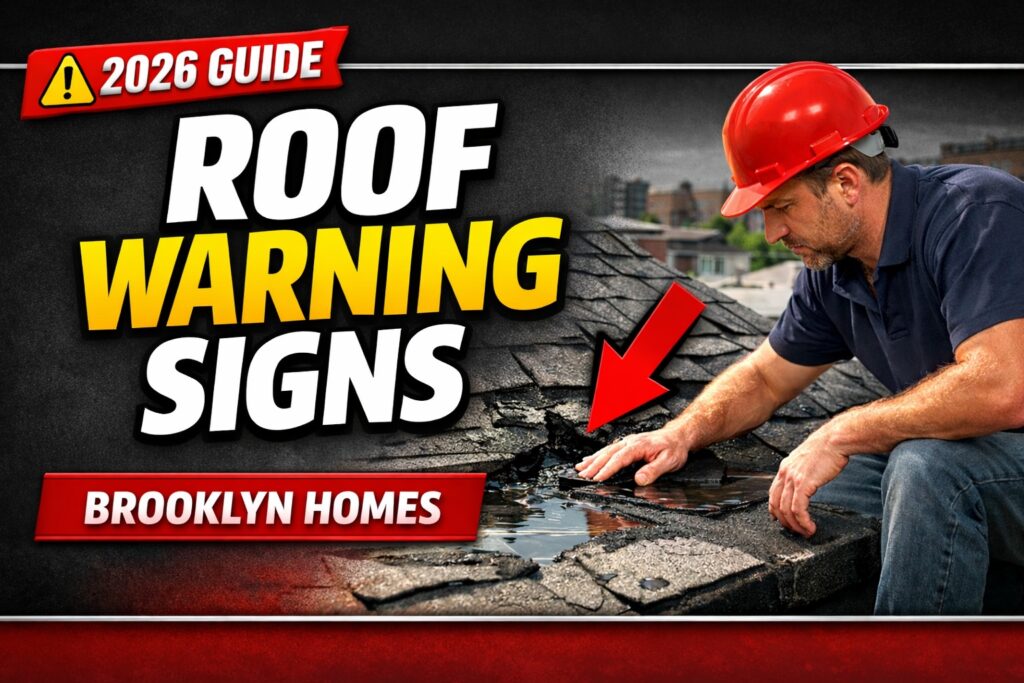
8 Warning Signs Your Brooklyn Flat Roof Needs Replacement
Not every roof problem means you need a full replacement. Some issues can be fixed with a targeted roof repair. But when multiple problems show up at the same time, or when the same section keeps failing after repeated patches, replacement is usually the smarter investment.
Here are the signs I look for when inspecting Brooklyn flat roofs:
1. Persistent Ponding Water
Some water sitting on a flat roof after a rainstorm is normal. But if water is still pooling 48 hours after the rain stops, you have a drainage problem. Persistent ponding puts constant pressure on the membrane and accelerates deterioration. Over time, it can cause the membrane to stretch, weaken, and eventually leak through to the deck below.
If ponding water has been an issue on your roof for years, the deck itself may have sagged, which means a simple re-membrane will not solve the problem. The deck needs to be corrected to establish proper drainage before a new membrane goes down.
2. Multiple Patches and Repairs
A patch here and there over the life of a roof is normal. But when your roof looks like a quilt of different materials layered on top of each other, the system has been pushed past its useful life. Each patch creates a new seam, and seams are where leaks start. If your contractor has been back three or more times to patch the same general area, replacement is the more cost-effective path forward.
3. Visible Membrane Damage
Walk your roof and look for cracks, blisters, bubbles, or areas where the membrane has pulled away from the edges or flashings. On EPDM roofs, look for seams that are separating or adhesive that has dried out. On modified bitumen roofs, look for bare spots where the granular surface has worn away, exposing the asphalt layer underneath.
Any of these conditions mean the membrane is no longer providing a continuous waterproof barrier. Small areas of damage can sometimes be repaired. But widespread membrane failure across the roof surface is a clear sign that replacement is needed.
4. Interior Water Stains and Ceiling Damage
If you are seeing brown water stains, bubbling paint, or sagging plaster on the top-floor ceiling, water is getting through the roof. This is the warning sign that most Brooklyn homeowners notice first because it is visible from inside the building.
The tricky part is that the leak on the ceiling is not always directly below the point where water is entering the roof. Water can travel along the roof deck and structural members before dripping down. That is why a professional inspection is important. We trace the leak back to its source rather than just patching the spot where the stain appears.
5. Sagging or Soft Spots on the Roof Surface
When you walk on your flat roof and feel areas that give or bounce under your feet, the roof deck underneath has been compromised. This usually means water has been sitting on or seeping through the membrane long enough to rot the plywood or OSB sheathing below. Soft spots are a serious structural concern and almost always require a full tear-off and deck replacement before a new membrane can be installed.
6. Flashing Failures Around Edges and Penetrations
Flashing is the metal or membrane material that seals the transitions between the flat roof surface and vertical elements like parapet walls, chimneys, skylights, and plumbing vents. These areas are the most vulnerable points on any flat roof because water naturally collects at transitions.
If you see flashing that is rusted, lifted, separated from the wall, or sealed with gobs of roofing cement, the original flashing system is failing. Flashing can sometimes be repaired individually, but when the flashing failures are widespread across the roof, it often makes more sense to replace the entire system.
7. Increased Energy Bills
A flat roof that is losing its insulating properties will cause your heating and cooling costs to rise. If your top-floor rooms feel noticeably hotter in summer or colder in winter compared to previous years, the roof insulation may be saturated with moisture and no longer performing. A roof replacement gives you the opportunity to install modern insulation that brings your building up to current energy standards.
8. The Roof Is More Than 20 Years Old
Age alone is not a reason to replace a flat roof if it is performing well. But if your roof is over 20 years old and you are starting to see any combination of the signs listed above, replacement is likely more economical than continued repairs. Every patch on an aging roof is a temporary fix that delays the inevitable.
Flat Roof Replacement Options for Brooklyn Buildings
When it is time for a new flat roof, you have several material options. Each one has strengths and trade-offs. Here is what we recommend for Brooklyn properties based on our experience.
EPDM Rubber Membrane
EPDM is the workhorse of Brooklyn flat roofing. It is a single-ply rubber membrane that is either fully adhered or mechanically fastened to the roof deck. EPDM handles the temperature extremes of New York weather well, from summer heat to winter freeze. It is durable, relatively affordable, and has a proven track record spanning decades.
Best for: Residential brownstones, rowhouses, and small apartment buildings where cost efficiency and long-term durability are the priorities.
TPO Membrane
TPO is a single-ply thermoplastic membrane with a white reflective surface. The seams are heat welded, which creates a stronger bond than the adhesive seams used on EPDM. TPO’s reflective surface can reduce rooftop temperatures by up to 50 degrees in summer, which helps lower cooling costs for top-floor units.
Best for: Building owners looking for energy efficiency and reflective roofing benefits. TPO is a strong choice for multi-family buildings where cooling costs are shared or passed through to tenants.
Modified Bitumen
Modified bitumen is a multi-layer asphalt-based system that provides excellent waterproofing and puncture resistance. It is heavier and more labor-intensive to install than single-ply membranes, but it holds up well on roofs with higher foot traffic or rooftop equipment.
Best for: Buildings with heavy rooftop equipment, frequent maintenance access, or building owners who prefer a multi-layer redundant system.
Roof Coatings (Alternative to Full Replacement)
If your existing roof membrane is in decent condition but starting to show wear, a silicone or acrylic roof coating can extend its life by 10 to 15 years at a fraction of the cost of a full replacement. Coatings are applied directly over the existing membrane after cleaning and minor repairs.
Best for: Building owners whose roof is aging but not yet failing, and who want to extend the roof’s service life without the expense of a tear-off and replacement.
We help every client choose the right material based on their building, their budget, and how long they plan to own the property. Our roofing team installs all four systems.
How Much Does a Flat Roof Replacement Cost in Brooklyn?
Here are realistic cost ranges for flat roof replacement on common Brooklyn building types in 2026:
Standard brownstone or rowhouse (800 to 1,200 sq ft roof): $8,000 to $18,000 depending on the material chosen and the condition of the existing deck.
Two-family home (1,200 to 1,800 sq ft roof): $12,000 to $24,000.
Small apartment building (2,000 to 3,500 sq ft roof): $20,000 to $45,000.
Roof coating over existing membrane: $3,000 to $8,000 for a standard residential roof.
These prices include tear-off of the existing roofing material, inspection and repair of the roof deck, installation of the new membrane, new flashings at all edges and penetrations, and cleanup. Scaffolding or crane access for material delivery may add to the cost on taller buildings or buildings with limited street access.
If the roof deck has significant rot or structural damage, deck repair or replacement adds $2,000 to $8,000 depending on the extent of the damage. We do not know the deck condition until the old roofing is removed, so we always communicate any additional work needed before proceeding.
What Does the Flat Roof Replacement Process Look Like?
Here is what you can expect when you hire AKRoofing3D for a flat roof replacement on your Brooklyn property:
Step 1: Inspection and estimate. We visit your property, inspect the roof from the surface and from inside the top floor, and provide a written estimate covering material options, costs, and timeline.
Step 2: Material selection. We walk you through the pros and cons of each roofing material and help you choose the best option for your building and budget.
Step 3: Permits and scheduling. We file any required permits with the NYC Department of Buildings and schedule the work around weather conditions.
Step 4: Tear-off. Our crew removes the existing roofing material down to the deck. We inspect the deck for damage and make any necessary repairs.
Step 5: Installation. We install the new membrane, flashings, drip edges, and any penetration seals. We also address drainage to minimize ponding.
Step 6: Cleanup and inspection. We remove all debris, conduct a final quality inspection, and walk you through the completed work. We also provide care and maintenance instructions for your new roof.
Step 7: Warranty. You receive a manufacturer warranty on materials and a workmanship warranty from AKRoofing3D.
For a standard Brooklyn brownstone, the entire process from tear-off to completion typically takes three to five working days, weather permitting.
How a New Roof Protects the Rest of Your Building
A new flat roof is not just about keeping water out. It protects everything underneath it. When a roof fails, the damage cascades through the building:
Water saturates the roof deck, causing rot and structural weakness. Moisture travels through ceilings and walls, causing stains, mold, and plaster damage. Insulation loses its effectiveness, increasing energy costs. On multi-family buildings, a single roof leak can damage multiple units and result in tenant complaints or DOB violations.
A quality roof replacement eliminates these risks for the next 20 to 30 years. It also protects your investment in other improvements. There is no point in spending money on a facade restoration or interior painting if water is entering the building from above.
Pair your new roof with functional gutters to make sure water drains away from the building properly. And if your building also has brick pointing or waterproofing needs, tackling those projects together with the roof creates a comprehensive moisture protection system for the entire building.
Get a Free Flat Roof Inspection for Your Brooklyn Property
Not sure if your flat roof needs repair or replacement? Call us at (646) 492-0756 or fill out our online quote form and we will schedule a free inspection. We will get on the roof, evaluate the membrane, flashings, and drainage, and give you an honest assessment of your options.
AKRoofing3D has been installing and replacing flat roofs across Brooklyn for over a decade. From Bed-Stuy to Bushwick, Crown Heights to Park Slope, we know Brooklyn roofs inside and out. See our work in our project gallery.
Frequently Asked Questions About Flat Roof Replacement in Brooklyn
How do I know if my flat roof needs repair or full replacement?
If the damage is limited to a small area and the rest of the membrane is in good condition, repair is usually the right call. But if you are dealing with widespread membrane damage, multiple patches, persistent ponding, or a roof that is over 20 years old, replacement is typically more cost-effective in the long run. We assess every roof individually and give you an honest recommendation.
Which flat roof material is best for Brooklyn?
For most Brooklyn residential buildings, EPDM rubber and TPO are the two best options. EPDM is the most proven and cost-effective. TPO offers better energy efficiency with its reflective surface. Modified bitumen is a good choice for buildings with heavier rooftop traffic. We help you choose based on your building, your budget, and your long-term plans.
Do I need a permit to replace a flat roof in Brooklyn?
Yes. Flat roof replacements in New York City require a permit from the NYC Department of Buildings. We handle the permit filing as part of every roof replacement project so you do not have to manage the process yourself.
Can you add a skylight during a roof replacement?
Absolutely. A roof replacement is the ideal time to install a skylight because the membrane is already being replaced and the roof deck is exposed. Adding a skylight during a replacement costs less than installing one as a standalone project because the setup and flashing work is already part of the job.
How long does a flat roof replacement take on a typical Brooklyn building?
Most residential flat roof replacements take three to five working days from tear-off to completion. Larger buildings or projects that require significant deck repair may take longer. Weather delays can also affect the schedule, which is why we recommend scheduling roof work during the spring through fall season when conditions are most favorable.
What warranty do you provide on flat roof replacements?
You receive two warranties. The manufacturer provides a material warranty covering defects in the roofing membrane, which typically ranges from 10 to 25 years depending on the product. AKRoofing3D provides a separate workmanship warranty covering the quality of our installation. We stand behind every roof we install.
Is a roof coating a good alternative to replacement?
If your existing membrane is still structurally sound with no major tears, ponding, or deck damage, a silicone or acrylic coating can extend its life by 10 to 15 years at roughly a third of the cost of a full replacement. Coatings are not a permanent solution, but they are an excellent option for building owners who want to delay a full replacement by several years.
Do you handle emergency flat roof repairs in Brooklyn?
Yes. If your roof is actively leaking, call us at (646) 492-0756. We prioritize emergency calls and can usually have a crew at your property within 24 hours. We perform temporary waterproofing to stop the immediate damage and then schedule a full inspection to determine whether repair or replacement is the right next step.